Monday, October 10, 2011

Colorful Aspens class results

Aspens, 12" x 7", pastel

At last week's class we took a closer look at the anatomy of these lovely aspen trees, examined the bark a little, and discussed how to paint the light, leafy foliage and sky holes. Above you can see my demonstration painting, completed in the course of that day.

I cropped it and saturated the color of the original photo, blurring the tree behind it so I wouldn't be tempted to paint too much detail there. I removed the scanty little trees in the foreground, and reshaped the foreground considerably, as you can see. I never meant to copy the photo--in fact, it only launched my thinking and helped me to show the students how to begin the drawing/painting process. Very soon I brought to it the memory I have of the lively look of these lovely trees that shimmer in the breezes. For the purposes of our demonstration I wanted to draw near enough to show a bit about how to paint the bark and some of the details of foliage.

My best advice, when painting taller trees particularly, is to find the entire outside geometric shape of the foliage and trunk. In this case I began with a long, slim oval. If a few leaves protrude beyond the edge of that initial shape it's no problem, but encompass the entire top-to-bottom, side-to-side shape in essence. In this case I let the treetop go off the page and shrunk the trees behind it for more of an organic sense of perspective.

The light colored bark is diagnostic, but please don't use too much white to paint it. Find many colors that may be combined to create 'gray', the color that really best describes this bark, both in the sunlight and shadow. Don't pick up your standard, everyday gray. Locate the darker (not black) striations in areas where there might be stress, such as where branches protrude or the tree flexes in the wind.

Foliage is open and leafy, with the 'balloons' often elongated and loose. (See the chapters on how to paint trees and how to paint foliage for further information.) Use a characteristic rounded shape to describe aspen leaves, utilizing the 'haiku' approach at the intersections of the balloons of foliage, the sky or background. Details should be implied, not over-described.The color of the foliage can be almost a rainbow, with emphasis on warm, pale yellows, oranges and greens. Flavor those colors with lavender or magenta underneath, to give *pop* to the colors, relying on the blue sky behind the oranges for the same.

Sky holes shouldn't be mechanical, large-medium-small holes where the balloons intersect, but should be well designed, rhythmic and visually interesting. These openings give the tree dimension and help to lead the eye around the tree. Smaller gaps are slightly darker in value (but the same color) as the sky, because of intervening small branches.

I hope everyone is having fun painting these colorful, lively trees.

Keep going, gang!
Deborah


Monday, October 3, 2011

A Change of Direction


To my dear students and friends--


For over 23 years now I've enjoyed teaching art classes, but recently I've begun to feel a divine nudge to move in a different direction.

My husband and I have been actively involved in various ministry opportunities over the last 13 years, primarily reaching out to the poor and homeless. After a time of caring for my aged mother before she passed on, we now feel that we're being called back into another more intense period of service. Neither of us is sure what that will be, but it's time for me to take a sabbatical from teaching in order to be available to find out from the Lord where He will lead us.

This gives me a lot of mixed feelings, as you can imagine. It saddens me to think that I won't prepare and teach a weekly class, and see those who have become friends over so many years together, but it also lifts my heart to think that I may end up serving in a way that is exciting for its spiritual implications. Since you know me, no doubt you know that I believe with all my heart, mind, soul and strength that I must be about the business of spreading the gospel, the good news of salvation from the Lord Jesus. So you know this is most important and uplifting to me, too.

Because several of you have generously paid in advance for a few classes, I can't simply disappear--which I wouldn't actually do anyway (although I admit it was a temptation, as it's hard to say goodbye to weekly classes after this length of time.) As it stands, I plan to offer classes each week from now through November 17th, the week before Thanksgiving, so that those of you who have already paid for classes have the opportunity to attend. I already have the October classes planned and posted, and will post the November plan in a couple of weeks, too. So I ask you to please consider what you've invested and take the remainder of what I owe you in the next few weeks.

If there's one thing I've learned in my walk with the Lord it's that I shouldn't try to read His mind, so I'm not making any plans that are more definite than this. Is this the end of classes, my total retirement from ever teaching again? I don't know. My plan is to finish this year (we always take a break after Thanksgiving, so that ends my teaching year), and to wait on Him to see what comes next.

I have begun writing another book, and may present it in a weekly blog format, as I did with Landscape Painting in Pastels. This one may be for sale at a modest cost. I don't  know yet. The topic is a bit different, but one I feel really compelled to write. It actually derives its content from this class blog and a lot of other classes I've taught over the years. I'm giving it the working title of:

BREAKTHROUGH!
Exercises and experiments you can do to
·    advance your artwork to a new level
·    break out of the doldrums
·    or just have some fun!

When/if it becomes a reality I'll be sure to post a link here for you.

So, that's the big news, the new plan, and my hopes, all rolled into one BIG announcement. We'll see where this leads next.

Meantime, see you in the next six weeks, I hope.

Keep painting, gang!
Deborah

October 6- Colorful Aspens

 
This week is the PERFECT time to study aspen trees! It's cooler and the trees along Sandia are already painting the top with licks of gold. I’ll show you some of my tips on how to capture the gorgeous colors of aspen trees turned to gold. 

Well start with a review of the basics of tree anatomy so that you can draw the trunk, branches and balloons of foliage more accurately. I'll also show you a bit about how to approach light colored bark in and out of  shadows, and talk about ways you can handle the background trees or mountains. I want to take some time to discuss tree holes and the sky behind the foliage, too. 


Bring your own photos or borrow one of mine. I have a wealth of photos that a friend took recently and I'm more than happy to share them with you. I can't afford to print a zillion copies, but if you'll let me know I'll send a couple of files to you ahead of time and you can print your own.
 
Any medium is welcome, as long as there are no strong smelling solvents. Bring a drop cloth for the table and floor, please.
 
As usual, the class is $25.00, payable at the door. If you plan to attend, please RSVP now.  
 
The studio opens about 11:00, and class is from 11:30-2:30. Feel free to bring your lunch. Remember, we're at the new location at CCF.
 
See you Thursday!
Deborah

Monday, September 26, 2011

October Class Schedule

October 2011 Classes


  • October 6- Colorful Aspens
I’ll show you how to capture the gorgeous colors of aspen trees turned to gold. 

You’ll get a review of the basics of tree anatomy, a bit about how to approach light colored bark in and out of the shadows, and some ideas about how to handle a background and the sky behind them.


Bring your own photos or borrow one of mine (reserve your print in advance, please). Any medium is welcome.


  • October 13- Fall Mountain Vista Paint Along

A NEW class!
Join me to paint an inspirational photograph together! I have a beautiful shot of a grand vista in Colorado with some very interesting challenges in it: distant aspen-dappled mountains, a blue lake, and a large pine and aspens in the fore. I’ll pass out the photo at class and lead a discussion on how to solve the problems. You bring your materials and come ready to explore what you think will work. Use any media you like. I'll be working in PanPastels.

 
  • October 20- How to Make a Lousy Photo into a Wonderful Painting

I’m going to share several of my own ‘awful’ photographs with you and discuss how we might go about making them into good paintings. So often a picture has some promising elements, but it just misses. Don’t toss those out! Let’s discuss how you can use several photos and combine them into one successful composition. So look through your photos for some awful inspiration! 

  • October 27- Sunlit Snow and Shadows

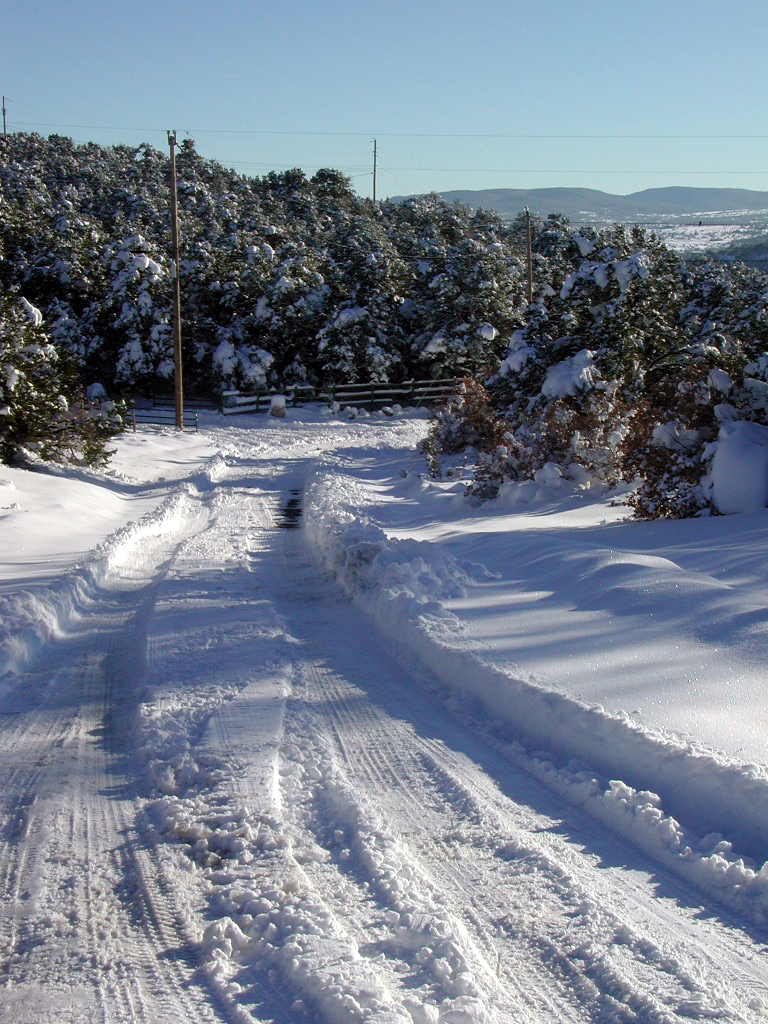
The rules for shadows are so clearly seen in the snow. I’ll also give you a review of the basics of how to paint snow in sparkling sunlight (but I'm not going to paint all those snow-dotted trees--come see why and what I do instead!)

I’ll be painting in gouache with PanPastels over the top, so you’ll get a taste of wet and dry media together. Any medium is welcome.


  • PLEASE NOTE: At the present time I plan to continue classes until November 17th, so if you have any credited classes, please arrange to use them during this time. No carryovers  to 2012, please! Thanks, gang!

September 29- Critique and Potluck Brunch


We’re planning a painting critique and potluck brunch this Thursday, and we’d love to have anyone join us. You might have attended our critiques before-- if you have you know how fattening delicious it can be and how much fun we have!

Bring your paintings ready to show, but not necessarily matted or framed. I’ll be happy to look at work in progress, as well. I’d love to view a small body of work so that we can get a sense of the direction you’re traveling, and will happily guide you in questions you have about individual paintings, too. Any medium, style, or subject matter is welcome.


At the critique we’ll start with brunch and a discussion about what it means to grow as an artist, especially as you become more mature in your work. Does that mean that you cease to change? Of course not. But the changes change, if you know what I mean. Let’s talk about it! Then we’ll view the work of one artist at a time.

We’re in a new location, in case you haven’t joined us recently, at Christ Community Fellowship church. We still have a small kitchen with a microwave, if you need to heat anything. It’ll be informal--we’ll be using paper plates. Bring your artwork and some kind of wonderful dish to share. 

Class begins at 11:30, but the doors open earlier to set up the meal. As usual, the cost is $25.00, payable at the door. If you plan to attend, please RSVP. 

See you Thursday!
Deborah


Tuesday, September 20, 2011

Cloud Boxes Tutorial

I just have to link you to this wonderful little tutorial by artist John Hagan on CLOUD BOXES.

I've used this as a theory for years, taking things a little farther, but I want you to see the original idea, and his wonderful illustrations. Here in New Mexico we often see this kind of perspective in the sky.

Put this one into your favorites!
Deborah

Monday, September 19, 2011

September 22- Extract Nature’s Colors


Let nature inspire the colors you use.

The colors of nature are truly the inspiration for the way we think about and use color, of course. In this class I want you to spend some time making a record of various colors you see together in the natural world, extract color charts from what you observe, and then create an interesting abstract painting using the charts. 

Perhaps you see cottonwood leaves turning colors, or the grasses in the front yard. Maybe you’re inspired by a ristra on your deck or some flowers, or weeds that are beautiful (the colors can be!) Remember—not the pot on the porch, not the paint on the wall—only natural colors. It’s best if these are strictly related colors (i.e. not the sky behind the trumpet vine, only the colors of the plant itself; the flowers and their leaves, not the warm, dark dirt below them.) 

You can see in the photo how I've chosen some of the colors from the trumpet vine and arranged them into a palette of colors above the photo. You can do one of several things: 
  • You might want to take good color photos that are fairly current before this class and print them out to bring with you.
  • You could make some color studies on location and bring photos with you of the things you studied. This could be more practical if you decide the entire cottonwood tree is your best inspiration, for instance. 
  • You may alternatively choose to bring items to study in class, perhaps a ripe pear, a beautiful flower or weed, some leaves on a branch, whatever you like.

In class we’ll make a palette of colors from nature, whether you use a photo or work from life—but the trick is, we will NOT paint those references. Instead, I want you to find beautiful harmonies of colors and analyze the proportions of each one, as well as analyzing the dark and light, warm or cool colors, and then use them to make a color chart.  

From this you will paint an interesting abstraction in class. Do I hear someone muttering that you don’t like abstracts, that they never work out? Well, never fear--this exercise will give you a template to use, so that won’t be a problem.

To do the class you'll need a clean, white surface large enough to accommodate a palette of five to seven color swatches, as well as whatever paper or canvases you want to use to paint the abstractions. I have templates for the experiment in abstraction that are 7" x 8" or 6" x 6"-ish, which you can adapt to make larger. I suggest keeping it somewhat smaller in size, however, because if you're inspired by this experiment, you might want to make more than one palette and/or abstraction. It's really quite interesting to see the results.

So come this week with an adventurous spirit and see what happens! I'm sure it will be fun and inspiring! 

As usual, the class is $25.00, payable at the door. If you plan to attend, please RSVP now.  
 
The studio opens about 11:00, and class is from 11:30-2:30. (Feel free to bring your lunch. We have a microwave.) Remember, we're at the new location at CCF.
See you Thursday!
Deborah